
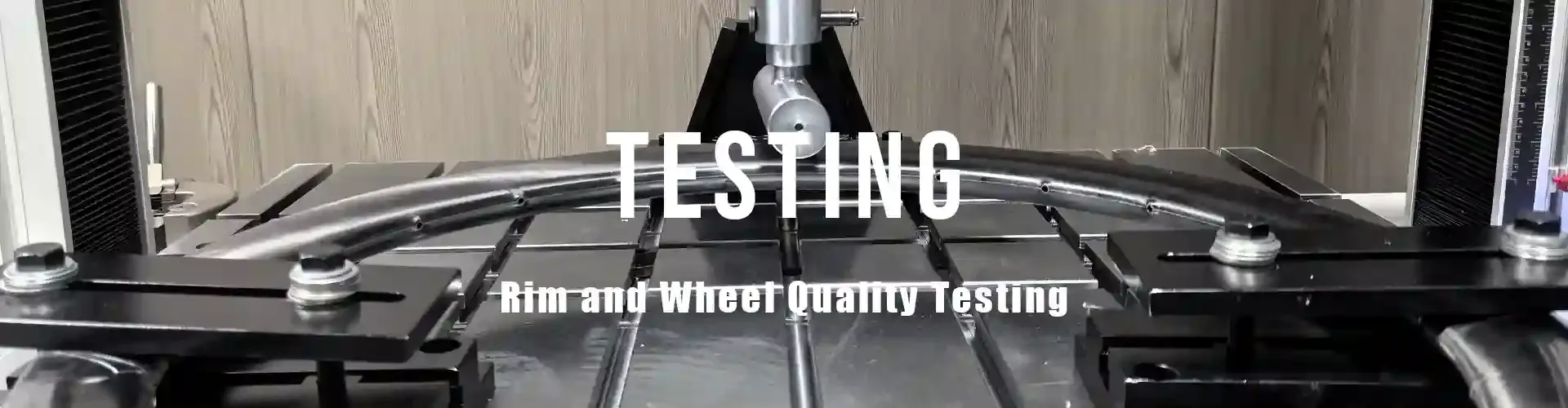
Carbon Wheel Testing Beyond Industry Standards
Every Light Travel carbon rim and wheelset must earn its place on the trail — on our own lab bench first. This page documents the tests we run in-house: impact resistance drops, vertical and lateral stiffness measurement, fatigue cycling, air-leak integrity, spoke-hole pull-out and more. Each protocol is built around international cycling safety standards, and samples from every production batch are re-tested, so the wheel you unbox performs like the one we validated. Browse the test reports below to see exactly how we push carbon fibre past its limits.

Wheel Building Test for Carbon Rims
A rim can pass isolated tests but still perform poorly if it does not build into a stable, true wheel. Final wheel quality depends on the rim, spoke tension, drilling angle, nipple bed, and build accuracy.
LEARN MORECarbon Rim Cutting Inspection for Hidden Defects
Some manufacturing defects are not visible from the outside. Internal burrs, inconsistent wall thickness, poor reinforcement placement, or laminate defects can affect strength and long-term durability.
LEARN MOREGreenhouse Heat Test for Carbon Wheels
Heat can affect rim shape, tire pressure, and spoke tension. This matters during prolonged sun exposure, hot storage conditions, and sustained braking heat.
LEARN MOREImpact Resistance Test for Carbon Wheels
Wheels can take sharp impacts from potholes, rocks, trail obstacles, or bottom-outs. Impact testing checks whether the rim structure can tolerate category-appropriate strikes.
LEARN MORESpoke Hole Pull-Out Test for Carbon Rims
The spoke hole area carries high tension once the wheel is built. Weak reinforcement around the nipple bed can lead to cracking, deformation, or long-term build issues.
LEARN MORELateral Stiffness Test for Carbon Wheels
Lateral stiffness affects how much a rim flexes side to side under load. This can influence handling feel, out-of-saddle efforts, hard cornering, and acceleration. It should not be confused with strength.
LEARN MORERim Air Leak Test for Tubeless Carbon Rims
Tubeless-ready rims need reliable airtightness. Small leaks can lead to pressure loss, setup frustration, sealant loss, or unreliable ride preparation.
LEARN MOREVertical Stiffness Test for Carbon Wheels
Vertical stiffness affects how much the rim deflects under load. Too little stiffness can make the wheel feel vague under force, while too much stiffness can reduce comfort depending on tire setup, terrain, and rider weight.
LEARN MOREFlatness Test After Tire Installation for Carbon Wheels
A rim that is not round or true can create uneven spoke tension, reduce structural consistency, and affect the final wheel’s stability.
LEARN MOREInflation Pressure Test for Carbon Rims
A rim must tolerate inflation pressure during setup and riding. This matters most for tubeless use, where the tire and rim interface must hold pressure reliably.
LEARN MOREProduct Testing Common Questions
Every rim and wheelset design passes a full battery of in-house lab tests before it reaches riders: impact resistance, vertical and lateral stiffness, fatigue (repeated-load) cycling, rim air-leak integrity, spoke-hole pull-out strength, and inflation pressure validation. Production batches are then sample-tested to the same protocols so the wheel you receive performs like the one we validated.
Our in-house protocols are built around the requirements of ISO 4210 (cycles — safety requirements) and the relevant EN standards for rims and wheels, with several tests run beyond the minimum thresholds to reflect real-world racing and trail abuse. Test conditions, loads and cycle counts are documented for each protocol so results are repeatable batch to batch.
A weighted striker is dropped onto a clamped rim section at a defined height and energy, simulating a hard square-edge hit such as a rock strike or curb drop. The rim is inspected for cracks, delamination and permanent deformation, then re-pressurised to confirm it still holds air. Passing impact testing is the single best predictor of how a carbon rim survives real riding abuse.
Both. Each finished wheel receives a 100% final inspection — true-ing, tension balance, air-leak and visual checks — before packing. In addition, samples pulled from every production batch undergo destructive lab testing (impact, fatigue, pull-out) so a process drift is caught on the bench rather than on the trail.
Vertical stiffness governs how much the wheel deflects under rider weight and bumps, while lateral stiffness determines how precisely it tracks through corners and sprints. We measure both on a fixture and tune the layup so wheels stay laterally stiff for accurate handling without becoming vertically harsh — the difference between a wheel that feels "fast" and one that simply feels "stiff".
