
The Four Types of Holes in a Carbon Bicycle Rim
The Four Types of Holes in a Carbon Bicycle Rim
Identify the opening before you work on it
On a double-wall rim, the tire bed faces the tire, the spoke bed faces the hub, and the hollow rim cavity sits between them. That cavity is separate from the pressurized space inside a tubeless tire.
Hole type | Typical location | Main purpose |
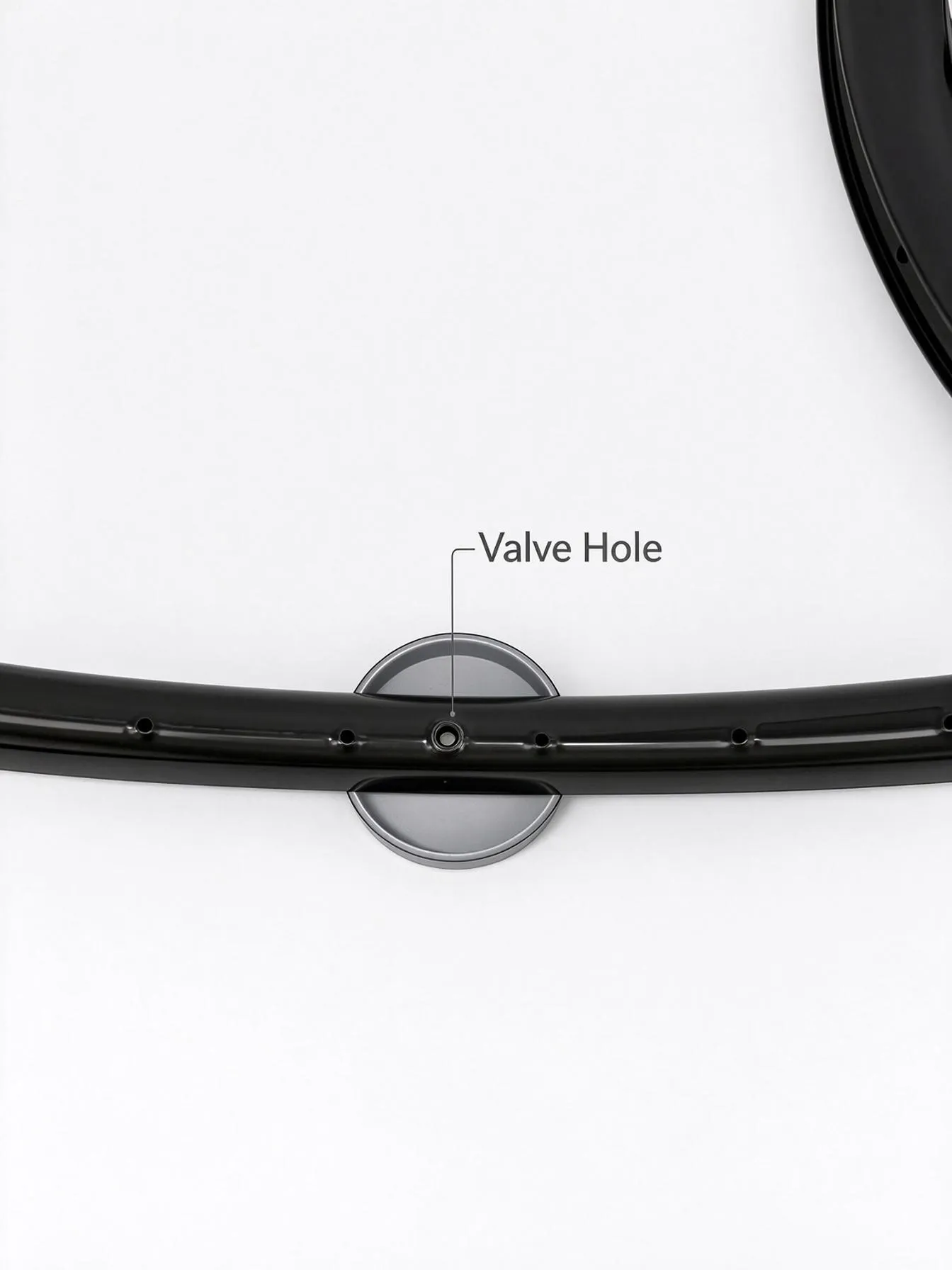
Valve hole | Valve passage through the rim | Accommodates an inner-tube or tubeless valve |
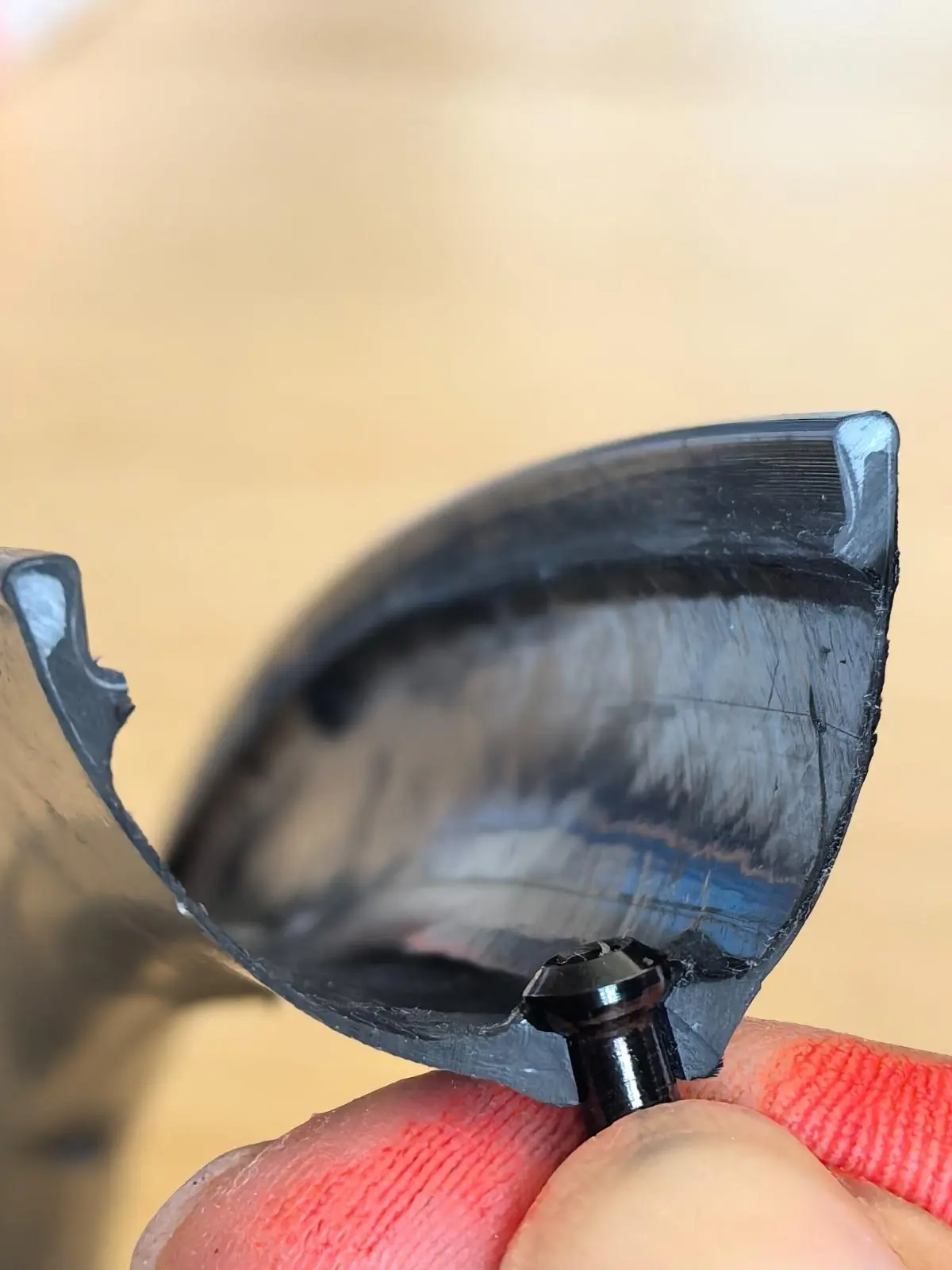
Nipple hole | Load-bearing spoke bed | Supports the nipple and spoke connection |
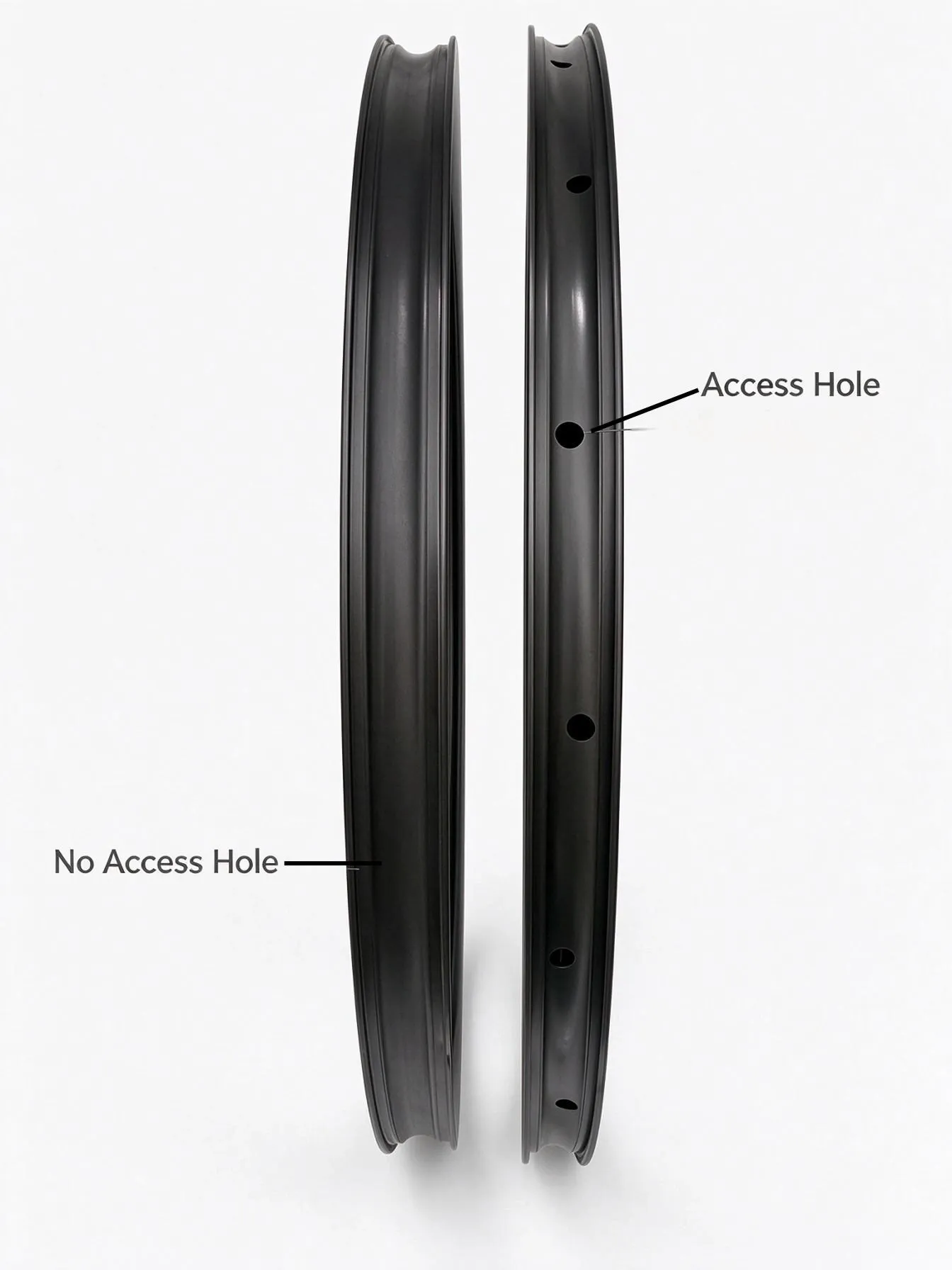
Access hole | Tire bed, where fitted | Allows nipple insertion and tool access |
Drain hole | Rim sidewall or designated position | Allows water to leave the hollow cavity |
1. Valve holes and valve fit
The valve hole accommodates the valve stem. With an inner tube, the tube holds the air. In a tubeless setup, the valve base must seal against the tire-facing rim bed or tape. A smooth hole edge helps protect the parts, but airtightness also depends on the valve base, tape and correct installation.
Choose a valve that matches the hole and rim-bed shape. Use rim depth + 15–20 mm as a starting estimate for valve length, then check pump access after installation. Do not enlarge a carbon rim’s valve hole to fit a different valve.
Find the right Presta valve length for your rim
 Value-hole-on-carbon-bicycle-rim
2. Nipple holes and spoke alignment
A spoke nipple threads onto the end of a spoke and transfers its tension into the rim through the nipple seat. Internal and external nipple designs both exist; the correct nipple and any required washer depend on the rim.
Hole angle and seat geometry should accommodate the spoke direction created by the hub dimensions and lacing pattern. Forcing a spoke to bend sharply at the nipple can increase local stress. Correct alignment, component choice and spoke tension work together.
Most Light Travel Cycling rim models use molded spoke holes with contoured nipple seats. The contact surface is designed to support the nipple head and help align the nipple with the spoke. Use the nipple specification for your rim model when building or servicing the wheel.
 Cutaway-carbon-bicycle-rim-showing-a-spoke-nipple-head-resting-against-its-seat
3. Access holes and tubeless rim beds
Access holes are the larger openings in the tire bed that let a wheel builder insert nipples or reach them with a tool. They are different from the load-bearing spoke holes. Where access holes are used, Light Travel Cycling reinforces the surrounding region as part of the rim design.
An approved tubeless-ready rim with access holes can run tubeless when the specified tape seals the tire bed. An undrilled or closed tire bed has no nipple access holes there, but still needs a valve passage and spoke connections. Some approved designs run without tape and use a different nipple-installation method.
Choose by the rim’s instructions and service requirements, not simply by the number of visible holes. Ask which Light Travel Cycling models offer a closed tire bed if you prefer that option.
 access-hole-on-carbon-bicycle-rim
4. Drain holes and moisture inside the rim
Drain holes, where fitted, let water leave the hollow rim cavity. Their position depends on the rim design. Trapped moisture may contribute to corrosion of metal hardware; the carbon rim itself does not rust.
Drain holes do not normally open into the tubeless tire’s air chamber. Some designs also have ventilation or pressure-relief openings. Keep designated drain and vent paths clear; do not plug them to stop an air leak.
What air or sealant at a rim hole means
Air or fresh sealant escaping around nipples, drain holes or the valve passage may indicate a faulty tape or valve-base seal. The exit point may differ from the source. The rim cavity is not intended to hold tire pressure.
Stop inflating and fully deflate before removing the tire to inspect the tape and valve seating. Follow the rim’s service instructions. Have unexplained leaks or damage checked before riding; do not plug the exit hole or keep adding pressure.
Frequently asked questions
Is a small hole in my carbon rim a defect?
It may be a deliberate drain or vent opening. Check the model’s diagram. New cracks, loose fibers or damage around a hole need inspection, even if another rim has a similar opening.
Do rims without access holes always work without tape?
No. Follow the model’s instructions. A closed tire bed may support a tape-free setup, but the rim, valve and tire must be approved for that use.
Can I customize the hole positions on my rims?
Ask about spoke count, nipple type, hole angles and drainage options before ordering. Our team reviews each specification against the rim model, layup and intended build. Do not add or enlarge holes after purchase without manufacturer authorization.
Plan your Light Travel Cycling build
Send your rim model, hub model, spoke count and preferred tire setup. For an existing wheel, add a clear photo and describe any leak or damage. Our technical team can help identify the opening and the next step.
Contact our technical team | Explore custom carbon wheelsets
Related reading on clincher and tubeless compatibility
Manufacturer references
[1] DT Swiss tubeless setup and leakage guidance
