
Hookless Rim Tubeless Tire Pressure for XC & All-Mountain: Safety Limits & Common Mistakes
Hookless Rim Tubeless Tire Pressure for XC & All-Mountain: Safety Limits & Common Mistakes
Quick answer: For hookless XC rims, the cold hard upper limit is 35 PSI with 2.35–2.4" tires. For hookless all-mountain rims, the cold hard upper limit is 30 PSI with 2.35–2.8" tires. These limits follow ETRTO guidance and Light Travel Cycling's in-house rim testing. Never exceed these values, and always reserve a 3–5 PSI safety buffer below the cold maximum to allow for heat-driven pressure rise on long descents.
Setting safe hookless rim tubeless tire pressure for XC and all-mountain riding demands extra care compared to traditional hooked rims. Many riders copy generic PSI recommendations from road or gravel guides without understanding the hard limits of hookless MTB rims. Improper tubeless tire pressure can lead to bead burping, sudden air loss, or permanent damage to high-end carbon hookless wheels. Drawing on real-world testing experience from Light Travel Cycling, this article covers practical safety rules, temperature-related pressure shifts, frequent setup errors and practical guidance for XC and all-mountain riders.
For a full reference chart on tubeless tire pressure, see our Tubeless Tire Pressure Guide: Complete Reference Chart.
What Makes Hookless Rims Special for XC & All-Mountain
Hookless rims remove the mechanical bead-locking hook found on conventional rims. Sealing relies entirely on precise dimensional fit between rim bed and tire bead, rather than physical metal retention.
For XC and all-mountain riding, this has real advantages:
Lower weight, which matters on long climbs
Better impact resistance on rough trails
Improved aerodynamics at speed
Modern wide MTB tires (2.35–2.4" for XC, up to 2.8" for all-mountain) run at lower pressures, where hookless rims perform best — but this also means the working pressure range is tighter than on hooked rims.
For a deeper comparison of hookless and hooked rim designs, see our Hookless vs Hooked Rims Comparison Guide.
ETRTO-Defined Pressure Boundaries
Maximum safe tubeless tire pressure for hookless rims follows standards laid out by ETRTO (European Tyre and Rim Technical Organisation), the leading industry body that defines engineering specifications for bicycle rims and tires.
Based on our in-house rim testing at Light Travel Cycling, our XC hookless rims carry a 35 PSI cold maximum and are recommended for 2.35–2.4" tires.
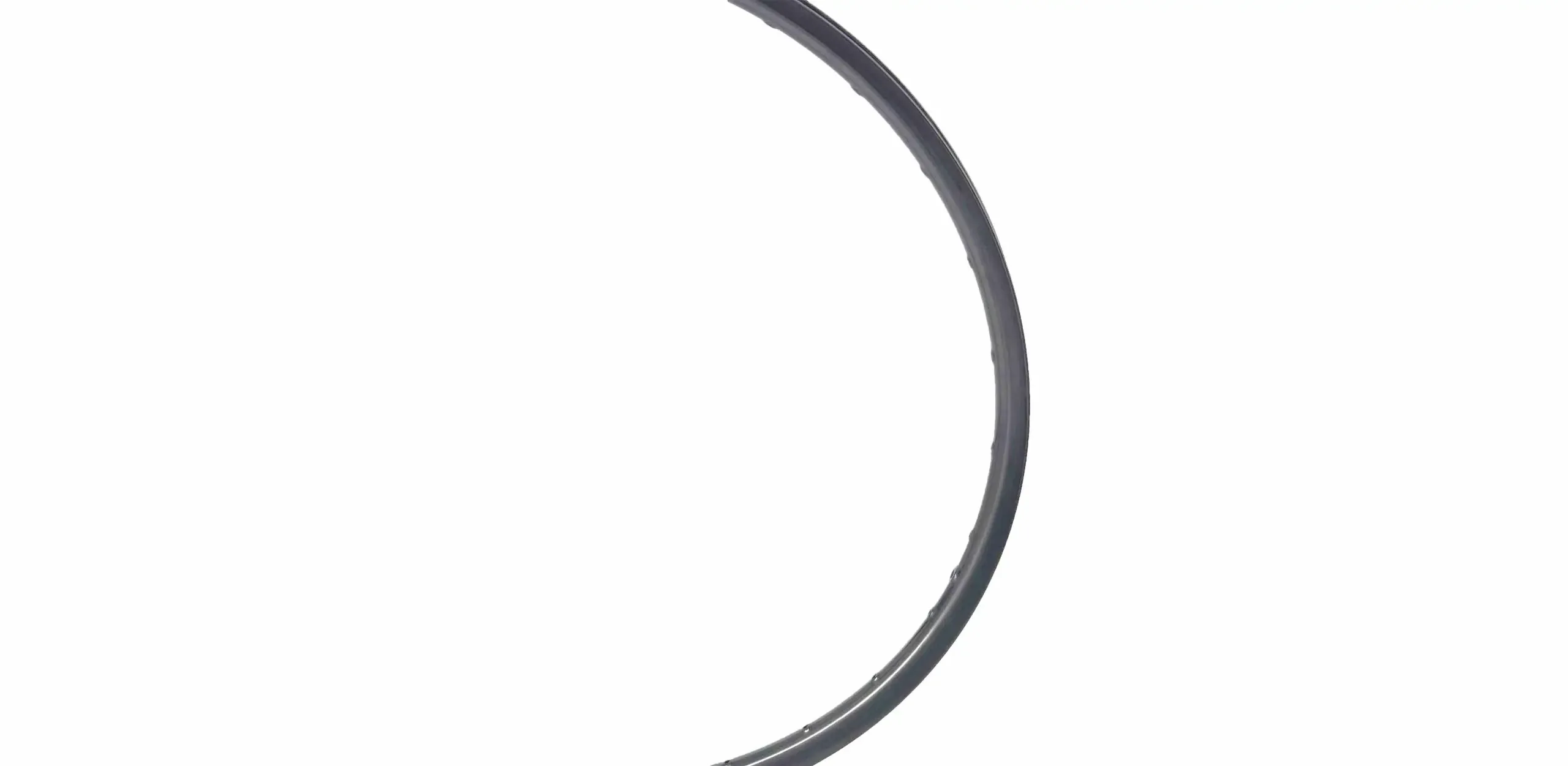 LightTravelCycling-CarbonXCRim-XC31-29er-Hookless-XCRacing-webp
Our all-mountain hookless rims carry a 30 PSI cold maximum and are recommended for 2.35–2.8" tires.
Heat-Driven Shifts in Tubeless Tire Pressure
Heat from long descents and sustained braking raises internal tire temperature and pushes up real-time tubeless tire pressure. This is a well-documented effect in tubeless systems, and is why most rim manufacturers recommend a safety buffer below the cold maximum.
For safety, do not inflate cold tires right up to the rim's absolute maximum rating. Reserve a 3–5 PSI safety buffer for heat-caused expansion. Always measure cold-state tubeless tire pressure before you begin your ride; hot-condition readings are unreliable for setup adjustments.
Bead Burping Caused By Poor Tubeless Tire Pressure Settings
Bead burping means partial sudden air leakage as the tire bead temporarily lifts off the rim bed. Hookless rims are far more susceptible to burping when tubeless tire pressure runs too low, especially under hard impacts or sharp cornering — both common in XC racing and aggressive trail riding.
Quick Burping Troubleshooting
Dried-out sealant also raises your minimum safe tubeless tire pressure. If you experience regular burping:
Refresh sealant older than 6–12 months
Increase cold pressure by 2–3 PSI
Double-check manufacturer rim-tire compatibility specifications
Common Hookless MTB Tubeless Tire Pressure Mistakes
Mistake 1 — Reusing road or gravel PSI values
PSI figures created for road or gravel setups may exceed hookless MTB rim pressure caps. Treat those numbers only as loose reference and obey your rim's hard maximum pressure.
Mistake 2 — Only trusting tire-sidewall markings
Hookless-rim limits aligned with ETRTO specifications override tire-printed pressure data. Rim specifications take priority for safe tubeless tire pressure.
Mistake 3 — Chasing comfort with excessively low pressure
Lower pressure boosts comfort and grip on rough trails, yet hookless rims carry a practical pressure floor. Over-low settings drastically raise burping and carbon-rim impact-crack risks.
Hookless MTB Pressure Reference
Application Scenario | Cold Hard Upper Limit (PSI) | Recommended Tire Width |
XC | 35 | 2.35–2.4" |
All-Mountain | 30 | 2.35–2.8" |
Note: These are the cold hard upper limits for our XC and all-mountain hookless rims, aligned with ETRTO guidance. XC is recommended for 2.35–2.4" tires; all-mountain for 2.35–2.8" tires. Actual riding pressure should be tuned to rider weight, tire width and terrain — and must never exceed the rim or tire maximum.
FAQ
Q: Can hookless MTB rims run very low tubeless tire pressure for comfort?
A: Moderate pressure reduction works with fresh sealant, but you cannot go arbitrarily low. Our XC rims cap at 35 PSI and all-mountain rims at 30 PSI — never exceed these limits. Too-low tubeless tire pressure greatly increases bead burping risk, especially on hard landings and sharp corners.
Conclusion
Setting hookless rim tubeless tire pressure for XC and all-mountain riding balances comfort, traction and non-negotiable hardware safety constraints. Drawing from our product-testing experience at Light Travel Cycling, we recommend avoiding blindly adopting road or gravel PSI advice, follow ETRTO-based and rim-printed limits, keep heat-related pressure growth in mind, and maintain fresh tubeless sealant.
