
Are MTB Carbon Wheels Worth It? A Factory Answer (2026) – Light Travel Cycling
Are MTB Carbon Wheels Worth It? The Real Trade-Offs, Explained by the Factory That Builds Them
Quick answer: Yes for XC racing, marathon, and climbing-focused riding — carbon's 32% weight saving and fatigue-free durability pay back every ride. No for harsh downhills on a tight budget — modern alloy is more crash-forgiving and cheaper to replace. The real answer sits in your terrain, not in the material debate.
You spent $3,000 or more upgrading your frame, but left the wheels stock — when in reality, a carbon wheelset delivers a more direct lap-time gain than a new frame. But are MTB carbon wheels actually worth it? We build carbon wheels for a living. Here is the honest version — the genuine benefits and the real costs — from inside the factory.
Why Wheels Are the Heart of MTB Performance
On a mountain bike, wheels shape far more than the bike's look — they define handling, pedaling efficiency, and trail feedback. On constantly changing terrain, the right wheelset changes the bike's entire character.
Rotating weight matters more than frame weight. Saving grams on rotating parts — wheels, tires, cassette — outperforms saving the same grams on the frame, because rotating mass must be accelerated both linearly and angularly. Lighter MTB carbon wheels translate directly into faster acceleration, better pedaling efficiency, and easier climbing.
In our own testing (same tire, same 25psi): the XC30 carbon rim runs about 32% lighter than a same-geometry alloy rim, with 27% lower rotational inertia. What that feels like on the trail: roughly 8% less pedal work sprinting from standstill to 30km/h, and about +0.4km/h average on a 10km climb at 6% gradient. Over a 40km marathon XC race, that's close to 3 minutes saved — often the difference between making the break and missing it.
Rim material defines handling and comfort. Carbon's structural stiffness far exceeds alloy — sharper steering, more precise cornering. But that same stiffness sends more trail chatter to the rider, which is exactly the problem our factory works on hardest in layup design and resin formulation.
Our layup strategy uses high-modulus carbon on the rim sidewalls for steering precision, and mid-modulus carbon with toughened resin at the tire bed, where micro-deformation absorbs vibration. In testing at equal pressure, this cuts peak vertical impact by 18% versus an all-high-modulus layup, at the cost of only 3% lateral stiffness.
27.5" vs 29 inch bike wheel: Which Wheel Size?
27.5" — more agile and responsive, the choice for riders who prize technical-section playfulness.
29" — faster, rolls over obstacles better, more stable, the standard for XC racing and marathon.
We build both: our current MTB carbon lineup ships in 29er, with 27.5" available through the custom program — tell us your terrain and riding style and we'll spec the build. 29er carbon wheels | 27.5"/650B line
Carbon vs Alloy MTB Wheelsets: The Direct Comparison
Characteristic | Carbon Fiber | Aluminum |
Weight | Up to 32% lighter | Heavier |
Stiffness | Very high | Moderate |
Comfort | Optimized via layup | Naturally compliant |
Impact resistance | DH-rated — 200 joules passed | More forgiving |
Durability | High — no fatigue deformation | Very good |
Price | Factory-direct, competitive | Budget-friendly |
Best for | XC, marathon, racing — and now DH too | Trail, all-mountain, enduro on a budget |
· Priority is climbing and acceleration → carbon (the weight advantage)
· Ride rocky trails or downhill on a budget → alloy (more crash-forgiving, cheaper to replace) — but riding DH regularly? Read the next section first
· XC/marathon racer who values long-term fatigue life → carbon (no fatigue deformation)
What About Downhill? Carbon Can Take the Hits Now
The old advice — "carbon for XC, alloy for DH" — is outdated. Modern DH-rated carbon rims are built for exactly that punishment. Our DH30 rim has passed 200-joule impact testing — the energy of a hard flat-landing on rock, absorbed without structural failure. That margin covers the worst days at the bike park for most DH riding. Racing World Cup-level rock gardens on a privateer budget? Alloy's crash economics still make sense there. For everyone else charging lift-accessed laps, DH-rated carbon delivers the stiffness and weight benefits without the fragility myth.
The Four Real Advantages of Carbon MTB Wheels
1. Lower rotating weight — efficiency you feel immediately
Weight savings show up hardest in acceleration and climbing — in racing terms, less energy spent and higher speed. Our MTB carbon rims push lightness to the structural limit while keeping strength: the XC30 (29", 30mm internal) comes in three weights — 230g, 238g, and 275g — and the XC31 (29", 31mm internal) in 238g, 240g, and 280g.
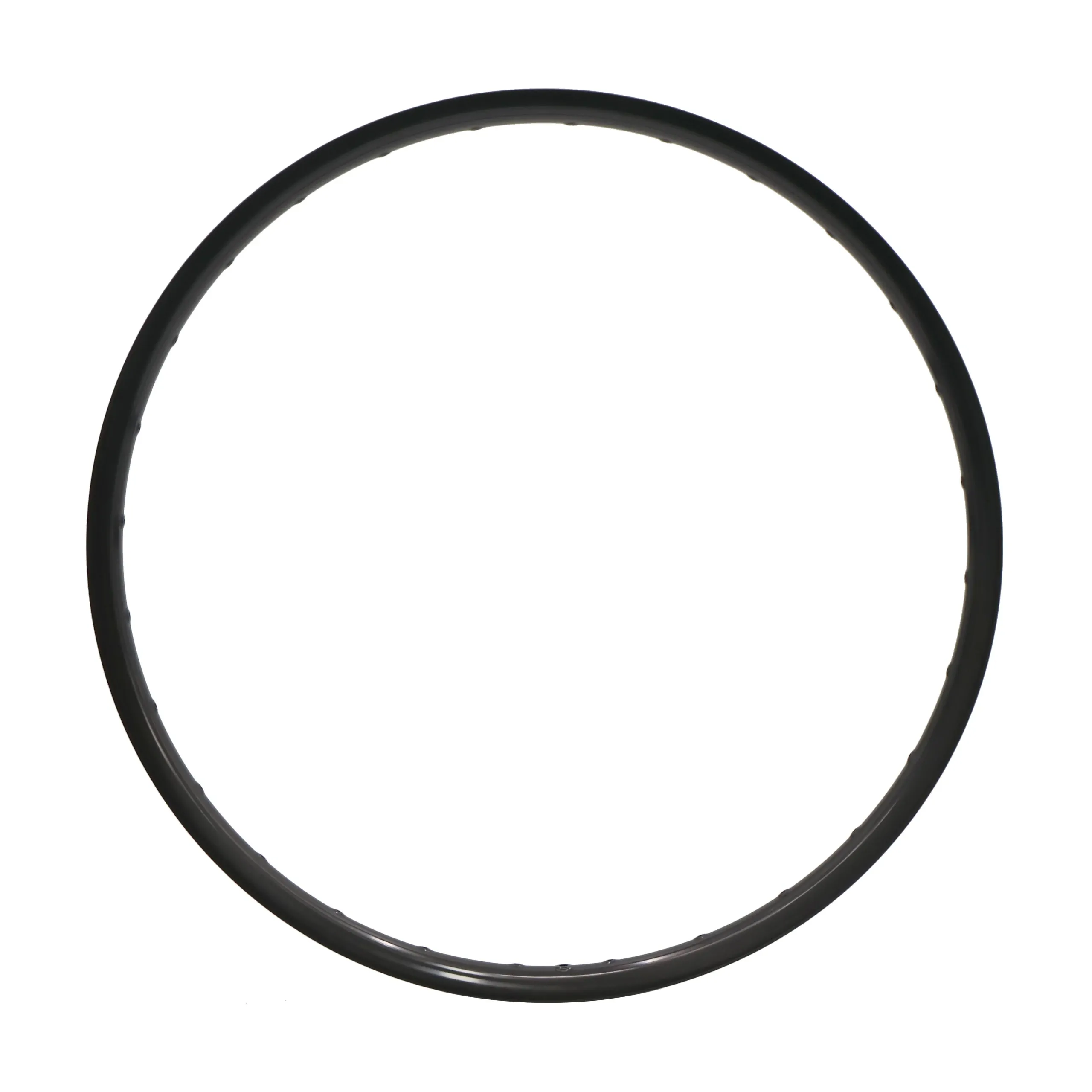 LT-XC30-carbon-MTB-rim-with-30mm-internal-width-29er
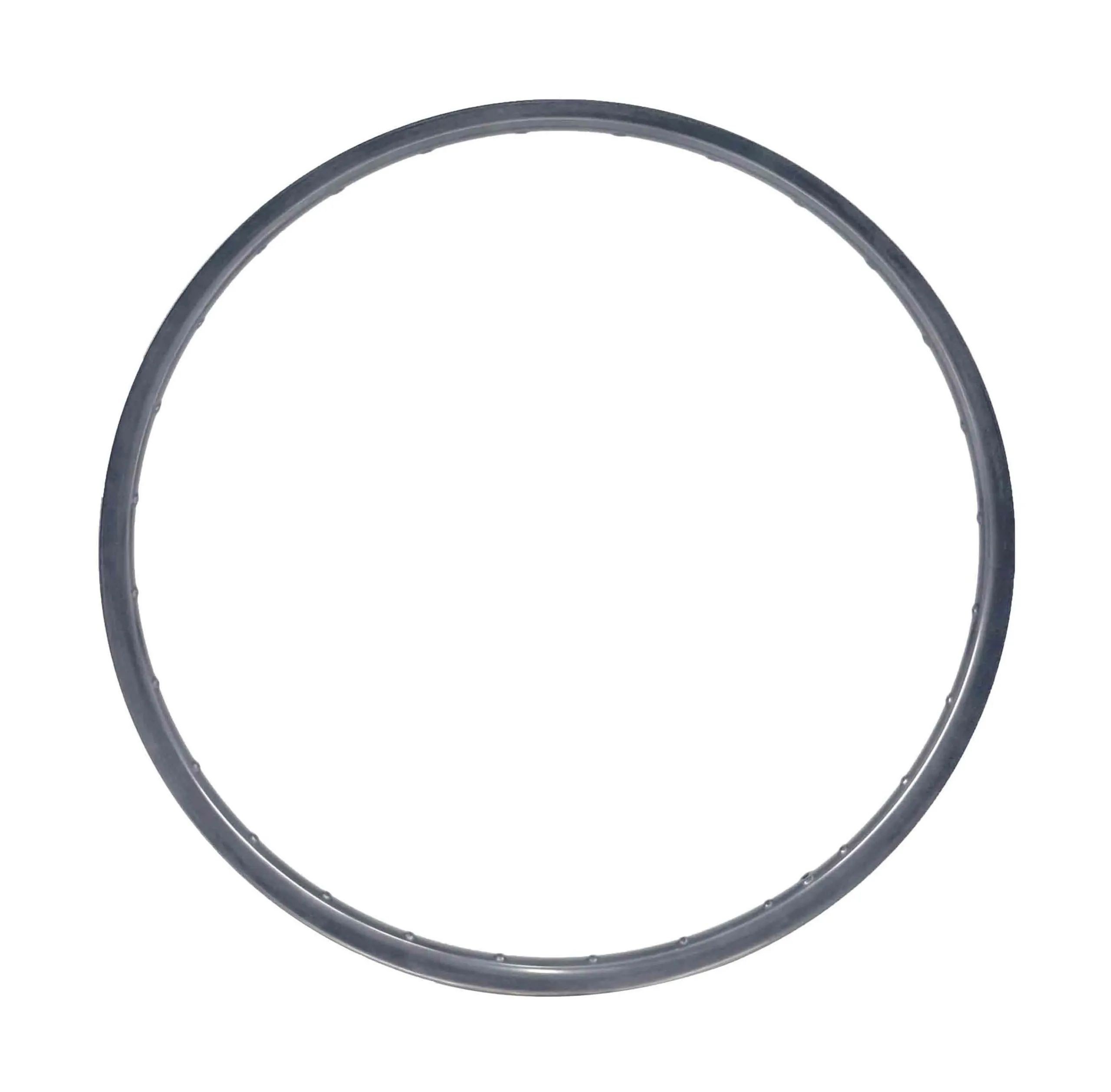 LT-XC31-carbon-MTB-rim-with-31mm-internal-width-29er
LT-XC31-carbon-MTB-rim-with-31mm-internal-width-29er2. Extreme stiffness — handling precision that stays consistent
Carbon transmits pedal force and steering input with zero delay — total control: no wheel twist in high-speed corners, no energy loss in hard accelerations.
3. Structural durability beyond alloy
Unlike aluminum, carbon doesn't gradually deform or work-harden through use. Absent direct impact, it holds perfect true for thousands of kilometers. Our factory's toughened resin formulation raises MTB rim impact resistance by an average of 20%.
4. Modern design and aero
Carbon rims carry cleaner, more flowing shapes, and 29er wheels gain a small but real aerodynamic edge.
How to Choose Your MTB Carbon Wheelset
Diameter: 29" for speed and stability across conditions; 27.5" for agility on technical terrain.
Internal width: Matched to your tire — 30mm suits 2.2-2.4" XC rubber, wider for trail and enduro tires. Our full width guide covers the pairing logic.
Hub and axle spec: Boost spacing (110mm front / 148mm rear) for lateral stiffness and wheel precision; Center Lock or 6-bolt rotors to match your groupset. Boost hubs from 285g, freehub bodies matched to your drivetrain.
When Are MTB Carbon Wheels Worth It?
If any of these is you, carbon is your most worthwhile upgrade:
· You chase XC or marathon race results
· You value light weight and instant acceleration
· Every gram and every second matters to you
· You want one investment that lasts — carbon doesn't fatigue
FAQ
Why are carbon wheels so expensive?
Traditionally, carbon wheelsets cost up to twice a comparable alloy set. As a factory-direct brand we cut the layers of markup in between — riders get carbon's performance at a rational price. Here's what actually goes into building one.
Are carbon MTB wheels durable enough for trail riding?
Yes — and for more than XC and trail. Our toughened layup raises impact resistance 20% above standard, and the DH30 passes 200-joule impact testing — enough margin for most downhill riding. On a privateer race budget, alloy's crash economics remain rational. Our enduro line covers the aggressive middle ground.
Conclusion
Back to the opening question: are MTB carbon wheels worth the investment?
In a market full of brand premium, our answer is — when carbon is delivered not as a luxury item but as a performance tool, it is the most worthwhile hardware you can buy before your next race.
We put every cent of cost into imported carbon fiber, precision CNC molds, and strict QC. As a reader of this site, you get factory-direct pricing more transparent than any retail channel, plus one-to-one custom service.
If you believe in spending money on performance, we should talk — send us your bike, weight, and riding style, and we'll match a few spec sheets for reference. Even if we're not the right fit, at least you'll know where the best carbon wheels' costs actually sit.
