
Rim Brakes vs Disc Brakes: Which Should You Choose?
Rim Brakes vs. Disc Brakes: Which One Should You Choose? A Guide to Clear the Confusion
Whether you’re a speed-focused road cyclist, a mountain biker on rugged trails, or an everyday commuter, brakes are vital to your safety and ride experience. Today, the vast majority of bicycles are equipped with either rim brakes or disc brakes, each with its own loyal following. This article provides an objective comparison of their strengths and weaknesses, addresses common questions, and offers practical advice to help you make the right choice for your riding style.
1. Fundamentals: How Do They Work?
Rim brakes: The brake caliper is mounted on the frame and fork, near the outer edge of the wheel rim. When the brake lever is pulled, the brake pads clamp directly onto the braking surface on the rim sidewalls, slowing the wheel through friction.
Disc brakes: The caliper is mounted on the frame and fork close to the hub, and a brake rotor (disc) is attached to the hub. When activated, the brake pads squeeze the metal disc, applying braking force at the hub centre.
The fundamental difference lies in where the braking force is applied – at the rim’s periphery versus at the hub. This distinction gives rise to distinctly different performance characteristics.
2. Advantages and Disadvantages of Rim Brakes
Advantages
Lighter weight: Without rotors, hydraulic hoses, and associated components, the overall bike weight is lower, making rim brakes particularly appealing for climbing-oriented road bikes.
Slightly better aerodynamics: The caliper sits close to the frame, producing less drag than a protruding disc caliper.
Simpler maintenance and lower cost: The mechanical structure is straightforward; most users can replace pads and make minor adjustments with a simple Allen key, keeping service costs low.
Cleaner aesthetics: The absence of bulky rotors and hoses gives the bike a more streamlined, classic look.
Disadvantages
Rims are consumable: Brake pads gradually wear down the rim sidewalls, eventually requiring replacement of the entire rim—an often expensive component.
Limited braking power: Especially for heavier riders or on long, steep descents, the stopping force of rim brakes is noticeably inferior to disc brakes.
Reduced performance in wet conditions: Rain, mud, and debris lower the coefficient of friction, significantly increasing stopping distances. Even grooved brake tracks designed to improve water drainage cannot match the wet-weather stability of disc brakes.
Restricted tire width: The caliper opening limits the width of rims and tires, making it difficult to accommodate modern wider tires (e.g., above 28 mm).
Heat build-up on long descents: Prolonged braking heats the rim, potentially softening brake pads and – with carbon rims – degrading resin properties, leading to fading or even tire blow-out risks (carbon rims are particularly susceptible).
Influence of wheel trueness: If the rim is out of true or has a hop, braking can feel jerky or produce inconsistent power, compromising control.
It is worth noting that some high-end carbon rims now feature graphene-enhanced brake tracks, which can withstand temperatures of up to 250°C under braking without deformation, and incorporate grooves to improve water evacuation and increase dry friction. While these technologies mitigate some drawbacks, they do not completely eliminate rim wear or inherent wet-weather limitations.
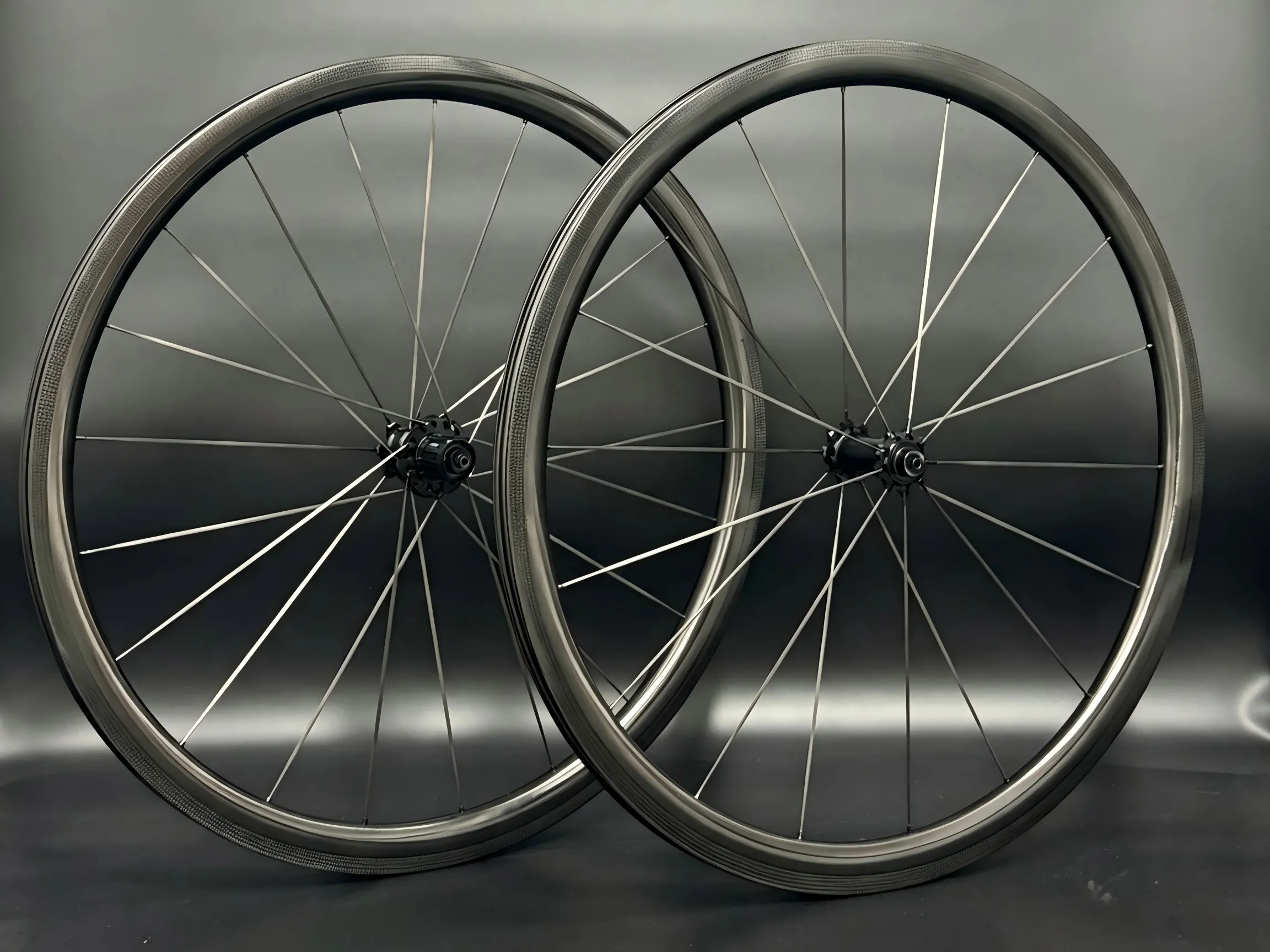 Rim-brake-rims
3. Advantages and Disadvantages of Disc Brakes
Advantages
Immune to rim trueness: Since braking force acts on an independent rotor, rim wobble does not affect smoothness or modulation.
Excellent all-weather performance: The rotor is positioned away from water and grime picked up by the wheels, ensuring stable braking in wet and muddy conditions.
Better heat dissipation: Metal rotors (often with perforations or cooling fins) dissipate heat more effectively than carbon rims, significantly reducing the risk of thermal fade.
Greater tire clearance: Without a rim caliper, disc frames allow wider tires and lower pressures, providing a more comfortable ride.
Powerful and linear braking: Strong stopping force requires less finger effort, offering greater control – ideal for mountain biking, loaded touring, and steep descents.
No rim wear: The rotor is the wear component; the rim itself does not experience brake-pad abrasion.
Disadvantages
Increased weight: The additional mass of rotors, calipers, and hoses is non-negligible, which may deter weight-weenies.
More complex maintenance: Mechanical disc brakes need periodic pad-gap adjustment; hydraulic systems require fluid changes and bleeding, which can be daunting for DIY enthusiasts and often require a shop visit.
Higher cost: Especially hydraulic disc brakes – complete systems are significantly more expensive than comparable rim-brake setups, raising the entry price.
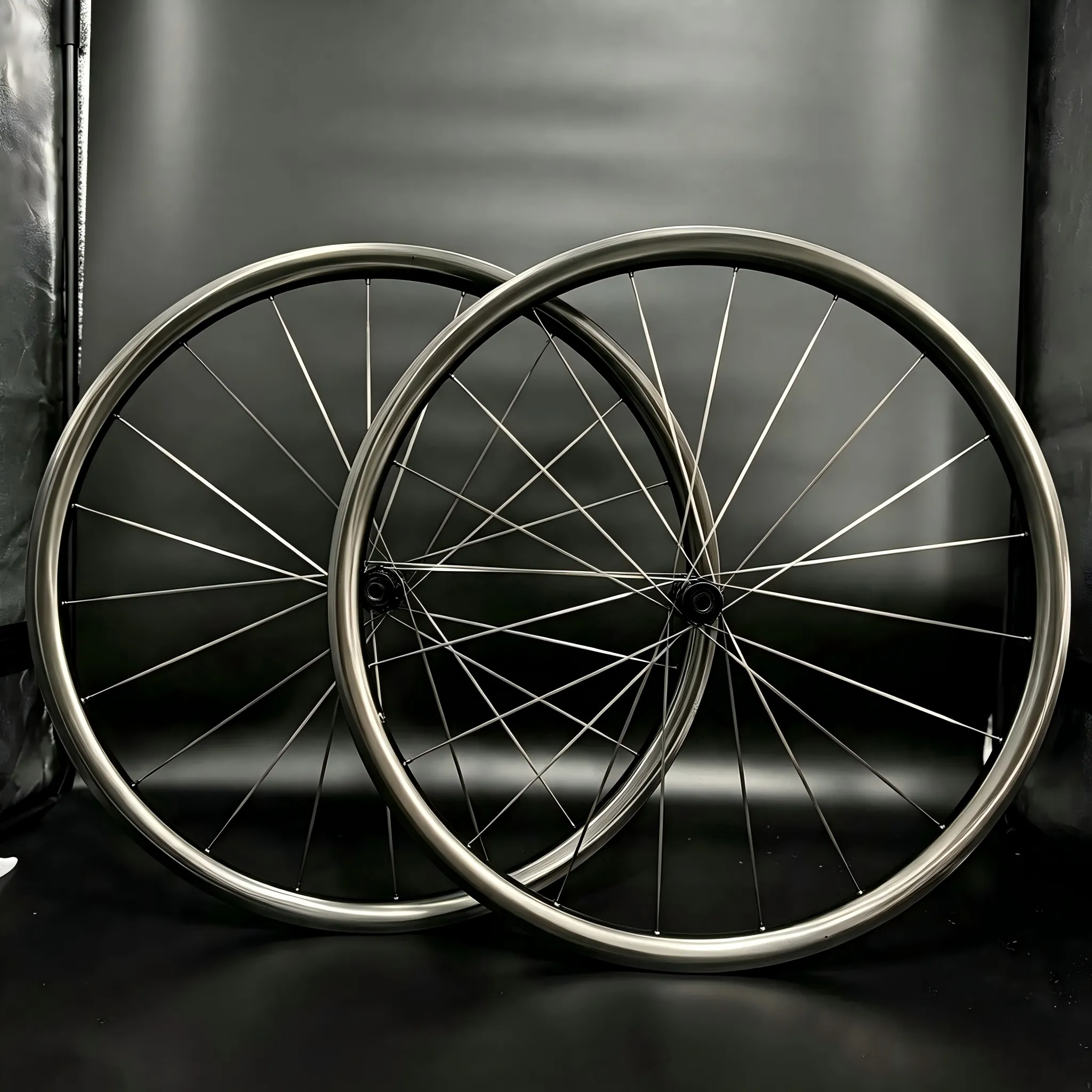 Disc-Brake-Rims
4. Mechanical vs. Hydraulic Disc Brakes
If you opt for disc brakes, you will also choose between mechanical and hydraulic actuation
Mechanical disc brakes: Operated via a steel cable, they are compatible with existing rim-brake levers and shifters, and cable replacement is straightforward. However, lever feel is firmer, modulation is less refined, and pad position requires manual adjustment as pads wear.
Hydraulic disc brakes: Use a closed fluid circuit, delivering smooth lever feel, powerful and linear output, and automatic pad wear compensation – the system adjusts pad-to-rotor clearance automatically, reducing maintenance. The drawbacks include the need for dedicated hydraulic levers, and initial bleeding requires some skill. Once set up, they require very little routine attention and outperform mechanical systems in every condition.
Recommendation: If your budget allows and you demand top performance, choose hydraulic disc brakes. If you want a budget-friendly upgrade with solid performance and you are comfortable doing basic maintenance, mechanical disc brakes work great for everyday riding.
5. Other Brake Types
Coaster brakes: Actuated by pedalling backwards, coaster brakes are common on children’s bikes and casual cruisers. Simple and reliable, but they only brake the rear wheel and are unsuitable for high-intensity riding.
Drum brakes: Brake shoes press outward against the inner surface of a sealed hub drum. They perform well in wet conditions as the braking surfaces are shielded, but they are prone to overheating on long descents and offer modest braking power. They are mainly found on utility bikes for flat, rainy environments.
6. Key Decision Factors – At a Glance
| Aspect | Rim Brakes | Disc Brakes |
|---|---|---|
| Braking power | Moderate; adequate in dry conditions | Powerful; confident in wet and off-road |
| All-weather stability | Poor; requires pre-braking to wipe rims | Stable; largely unaffected by weather |
| Rim lifespan | Rims wear out and must be replaced periodically | Rims suffer no wear; only rotors/pads need changing |
| Maintenance cost | Low; easy to service at home | Higher (hydraulic requires professional bleeding) |
| Initial purchase cost | Low | High |
| Weight | Lighter | Heavier |
| Wheel removal for flat repair | Must release brake quick-release first | Direct removal without interference; cleaner and easier |
7. Practical Advice – Which Should You Choose?
Prioritise disc brakes (especially hydraulic) if you:
Frequently ride in rain, mud, or on rough/unpaved surfaces (e.g., commuting, mountain biking, gravel).
Are a heavier rider or tackle long descents where high braking power is essential.
Value consistent, smooth lever modulation and want to minimise adjustments.
Intend to use tires wider than 28 mm for improved comfort and traction.
Rim brakes remain a viable choice if you:
Mostly ride on dry, paved roads in fair weather (e.g., weekend club rides, competitive climbing).
Are highly weight-conscious and appreciate aerodynamic benefits.
Have a limited budget and enjoy performing your own maintenance.
Prefer the clean, classic appearance and do not mind replacing rims periodically.
8. Common Misconception: Can You Convert a Rim-Brake Frame to Disc?
Almost certainly not. Disc-brake frames and forks are engineered with additional material and reinforcements, and they feature dedicated caliper mounts (flat-mount or post-mount). Even if your frame has bolt holes (some older “universal” frames), you would still need disc-specific wheels – and compatibility risks are high. Therefore, if you desire disc brakes, the wisest path is to buy a bike that comes factory-equipped with them.
Summary
There is no single “best” brake – only the one that best suits your riding environment. Rim brakes hold an enduring advantage in lightness, simplicity, and low upfront cost; disc brakes have earned widespread favour through superior all-weather performance and powerful, consistent stopping force. We hope this comparative analysis clears the fog and empowers you to make a confident, informed decision – so that every ride is both safe and enjoyable.
Related Article:Are Carbon Thru Axles Worth Upgrading? The 2026 Ultimate Guide
Carbon Road Bike Wheels Buying Guide
Tubeless Tire Pressure Guide: Complete Reference Chart
