
The DH30 Downhill Rim: How We Built a Wheel for the Worst Days of Your Riding
The DH30 Downhill Rim: How We Built a Wheel for the Worst Days of Your Riding
Downhill is the discipline where the bike stops being transportation and starts being crash-test equipment. Two-to-five meter drops, rock gardens at 50 km/h, eight-inch rotors hauling 17 kilograms of bike and rider down a mountainside — that's a normal Sunday at the bike park. XC and enduro wheels make compromises to climb. A DH rim makes none, because it never has to pedal home.
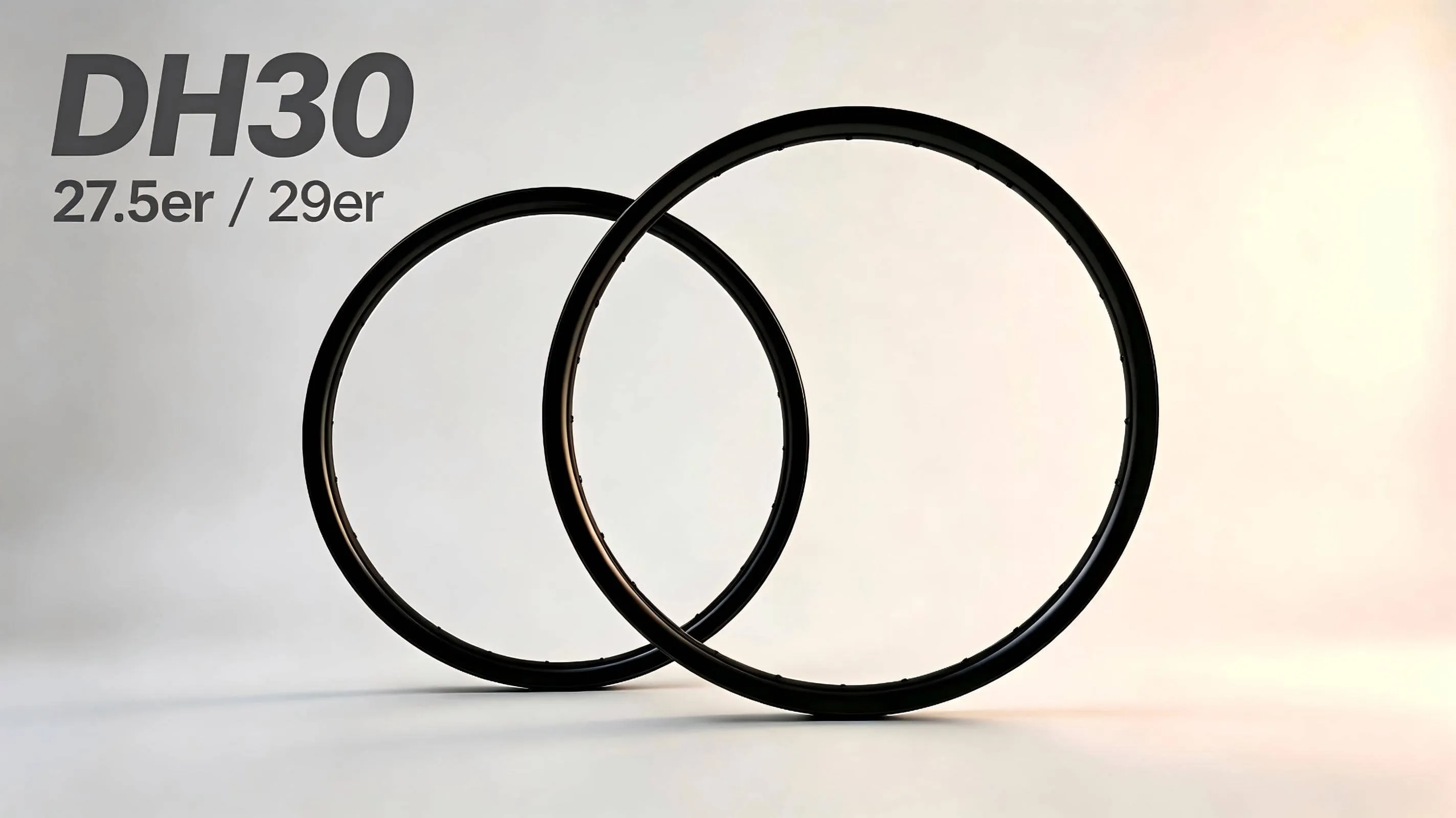
The DH30 is our answer to that job description. Two sizes, one 30mm internal width, and an impact rating we'll stand behind number by number. Here's what it is and why it's built the way it is.
Two sizes, two characters
Downhill split into two camps years ago, and pretending one size fits both would be lazy engineering. So the DH30 comes in two genuinely different rims:
The 29er runs a low 19.6mm profile. Big wheels roll over things; on World-Cup-style tracks — long, steep, relentlessly rough — that roll-over is speed, and the low height keeps the mass where it's stable at velocity. If your season is spent on alpine tracks hunting tenths, this is your rim.
The 27.5er gets a 24mm height and a different personality: quicker to change direction, happier in tight technical corners, friendlier to smaller riders. Plenty of fast racers still choose it on the right course. We didn't build it as a consolation prize — it's the 27.5 riders' home-turf weapon.
Both share the same 30mm internal width, because downhill went wide-tire years ago and there's no going back. And both deliberately ignore aerodynamics — at DH speeds with 2.5" tires, sidewall thickness earns its place in the laminate; aero features don't.
 light-travel-cycling-dh30-carbon-downhill-rims-in-29er-and-27-5-inch
The impact numbers, and what they mean
We'll give you the numbers plainly, because that's what we'd want as riders. Standardized hammer-strike testing, aimed at the vulnerable zones — spoke-hole beds and bead seats:
The 29er takes 200 joules. The 27.5er takes 190. No structural failure, on either.
For context: the mainstream benchmark for downhill rims sits around 170–180 J, and those extra joules aren't decoration — they're roughly the difference between riding away from a bad landing and walking down the rest of the track. In real terms, 200 J is on the order of what a rider-plus-bike dumps into a wheel flat-landing on rock from about a meter up. The worst of normal downhill riding lives inside these numbers.
And the honest part, because we're a factory and factories should be precise: 200 J does not mean indestructible. Catastrophic crashes break things — that's physics, and every rim on earth. What it means is that the failures you can reasonably expect from riding hard are designed out, with margin.
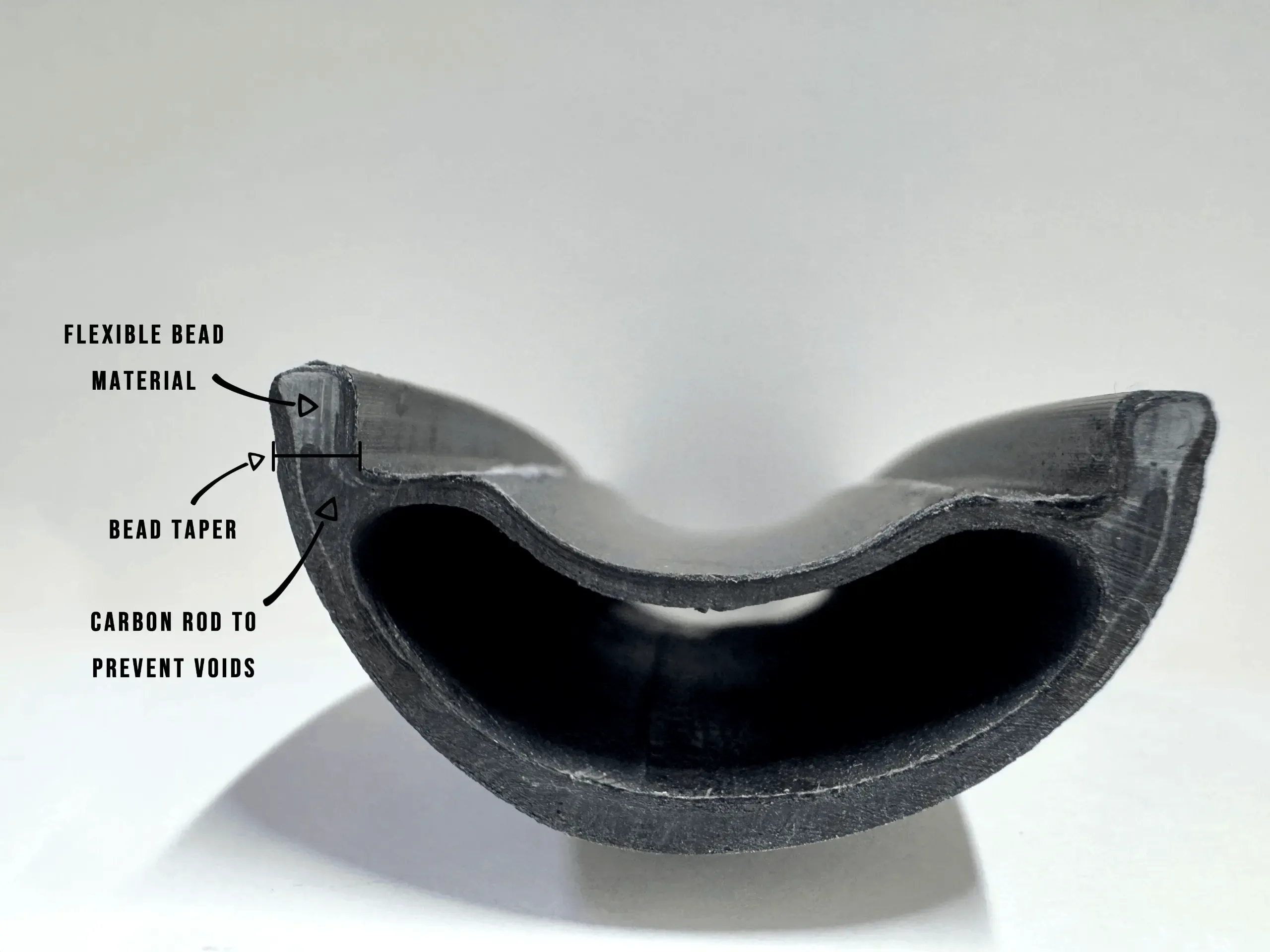
How? Toughened resin we formulate ourselves. Sidewalls sized for flat landings rather than gram-counting. Spoke-hole beds with the molding-and-reinforcement treatment — our molded (never drilled) holes hold past 300 kgf in tensile testing; the full engineering story is here. And because bike-park riders put in seasons, not weekends, the same build resists fatigue, not just single hits.
If you're comparing across our line: the XC30 exists to weigh 238 grams. The DH30 exists to come home. Different rims, different arguments, and we're happy to be held to both.
 light-travel-cycling-dh30-carbon-downhill-rims
Tires and pressure: half the performance is in the setup
A rim this wide rewards riders who set it up right, and punishes lazy defaults.
Tire size: 30mm internal width is built for 2.3"–2.6" rubber, with the sweet spot at 2.4"–2.5". In that window the tire holds its designed profile, sidewalls load evenly, and the contact patch gets as big as it's meant to be. Narrower than 2.3" and the tire balloons oddly, stressing sidewalls while wasting grip. Wider than 2.6" mounts fine, but save it for proper mud — as an everyday setup it's slower than it looks.
Pressure: downhill's whole philosophy is low pressure — think 22–30 psi. The tire is your first suspension component: let it deflect over rock and it absorbs the hit before the rim ever knows about it. High pressure skips that cushion and feeds every impact straight into the laminate. (This is the one setting where riders most often sabotage their own equipment.) Go tubeless, too — at these pressures, tubes invite pinch flats, and sealant closes the thorn holes before you've stopped rolling. Tubeless spares here.
Tread: match it to the dirt, not the shop window. Deep lugs for wet mud. Medium-density blocks as the do-everything choice for most park and race days. Low-profile fast-rolling rubber for hard, dry surfaces where braking matters more than digging. And the classic DH logic — grippy front, fast rear — works exactly as it always has on the DH30.
Who this rim is for
Pure downhill, in a sentence: gravity does the work, the equipment takes the beating. Two hundred millimeters of suspension, a 15–17 kg bike, and a lift carrying you back up for another run — all day. That last part matters most for wheels: park riders put in seasons of runs in a single year, which is why durability isn't a nice-to-have in this category, it's the category.
The DH30's rider weight limit is 130 kg on the standard build — enough headroom that heavier riders can stop thinking about it. And if your riding is actually mixed — climbing to earn the descent — you're looking for our enduro line instead, and that's a genuinely better tool for you. Honest fitting beats a hard sell.
Three quick ones
Is 200 J a lot? The mainstream DH benchmark is around 180–185 J. The 29er clears it at 200, the 27.5er at 190 — both on standardized testing at the rim's weakest zones. Make of the margin what you will; we'd rather have it and not need it.
29er or 27.5"? Long, fast, steep tracks: 29er. Tight, technical, or you're not tall: 27.5er. Same width, same layup philosophy, different personalities.
What if I crash on it? The 5-year warranty covers production defects, full stop. Crash damage we assess case by case — send photos and the story, and we'll give you a straight answer, not a form letter.
That's the DH30. Built for the worst days of your riding, tested to numbers we'll defend line by line. See the full specs here — and if you're unsure which build fits your riding, tell us your tracks and weight; we spec wheels for people all day.
